- Democracy in West Africa: Beyond Elections, Toward Accountability
- ECOWAS Integration: Stop the Political Lip Service
- Ghana’s Cedi Crisis: Citizens Deserve Monetary Stability
- Nigeria’s Oil Dependency: Time to Break the Curse
- United States Signals Continued Tight Monetary Policy Amid Inflation Concerns

Russia Ukraine Conflict Enters New Phase Amid Renewed Diplomatic Efforts
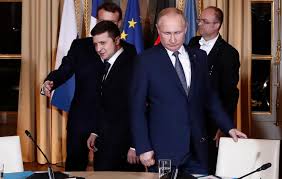
The conflict between Russia and Ukraine has entered a renewed and complex phase marked by intensified military engagements along key фронт lines and parallel diplomatic efforts involving regional and international actors. Developments over recent weeks indicate a simultaneous escalation on the battlefield and cautious movement toward renewed dialogue.
Heavy fighting has been reported in eastern and southern Ukraine, particularly around the Donetsk and Zaporizhzhia regions, where Ukrainian forces have continued defensive and counteroffensive operations. Russian military units have also increased aerial and missile activity targeting infrastructure and military positions. Ukrainian authorities stated that civilian areas remain at risk despite air defense interceptions.
Speaking in Kyiv earlier this month, a senior Ukrainian government official stated that “Ukraine continues to defend its sovereignty and territorial integrity under extremely difficult conditions. Our priority remains the protection of civilians and the preservation of statehood while engaging partners on diplomatic and security support.”
In Moscow, Russian officials reiterated their position that military operations are linked to what they described as strategic security objectives. A spokesperson for the Russian Foreign Ministry said during a briefing in Moscow that “the Russian Federation remains open to dialogue, provided that its core security concerns and realities on the ground are taken into account.”
Alongside military developments, diplomatic activity has increased. Meetings involving representatives from Türkiye, the United Nations, and selected European states have taken place in Ankara and Geneva during the past month, focusing on humanitarian access, prisoner exchanges, and the protection of critical civilian infrastructure.
A United Nations official involved in the discussions stated in Geneva that “there is recognition on all sides that humanitarian issues cannot be subordinated indefinitely to military considerations. Limited confidence building measures are being explored, even as the broader political settlement remains elusive.”
Energy security remains a central concern linked to the conflict. Ongoing disruptions and the risk of escalation have continued to influence European energy markets, particularly natural gas supply routes. European Union energy ministers meeting in Brussels last week emphasized the need for sustained diversification and strategic reserves.
One EU official noted that “the conflict has fundamentally reshaped Europes approach to energy security. While emergency measures have reduced vulnerability, long term stability depends on structural transformation and regional coordination.”
Sanctions and economic measures continue to shape the strategic environment. Western governments have maintained and, in some cases, expanded sanctions targeting Russian financial institutions, defense industries, and export sectors. Russian authorities have described these measures as economically hostile, while Western officials argue they are intended to constrain the capacity for prolonged conflict.
In Washington, a senior United States administration official stated during a press briefing that “support for Ukraine remains firm, both in terms of security assistance and diplomatic engagement. At the same time, channels for de-escalation and dialogue are essential to preventing wider instability.”
Humanitarian agencies report that displacement remains a critical issue, with millions of Ukrainians internally displaced or living as refugees across Europe. Aid organizations operating in Poland, Romania, and Moldova have called for sustained international funding, warning of donor fatigue as the conflict extends.
Despite renewed diplomatic contacts, analysts caution that prospects for a comprehensive settlement remain uncertain. A security analyst based in Berlin observed that “current diplomatic efforts appear focused on managing risk and limiting humanitarian fallout rather than resolving core political disputes. The conflict has become deeply entrenched.”
As military operations continue and diplomatic channels cautiously reopen, international observers agree that the coming months will be decisive in shaping both the trajectory of the conflict and its broader implications for European security and global geopolitical stability.