- Democracy in West Africa: Beyond Elections, Toward Accountability
- ECOWAS Integration: Stop the Political Lip Service
- Ghana’s Cedi Crisis: Citizens Deserve Monetary Stability
- Nigeria’s Oil Dependency: Time to Break the Curse
- United States Signals Continued Tight Monetary Policy Amid Inflation Concerns

Navigating Democracy Amid Regional Power Shifts and Oversight
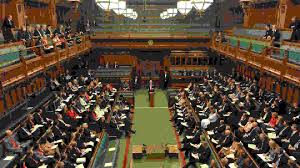
In a moment when democratic institutions across Africa face mounting pressures from political instability, security crises and executive overreach, recent moves to strengthen parliamentary oversight offer a means to renew confidence, safeguard accountability and recalibrate the balance of power.
Renewed Oversight in Practice: South Africa Leads by Example
On 3 December 2025, the National Assembly of South Africa adopted amended parliamentary rules to establish a dedicated Committee on the Presidency — a formal body empowered to scrutinise the Presidency’s operations, budget and conduct.
This marks a historic shift: for the first time the Presidency — often viewed as beyond ordinary legislative scrutiny — will be subject to routine oversight under parliamentary rules. Advocates argue the move could strengthen democratic institutions by ensuring transparency and accountability at the highest level of government.
Observers suggest this kind of structural reform helps reinforce checks and balances — a critical feature in a period where many African states contend with the rise of personalised power, executive dominance and erosion of democratic norms.
Growing Public Demand for Oversight: Uganda’s Experience
Recent polling in Uganda reveals strong public support for the role of parliament in lawmaking and oversight over the executive. According to a September 2025 survey, roughly 77% of Ugandans believe parliament — not the president — should make laws, while 74% say parliament should ensure the president regularly reports on government expenditures.
Oddly, however, many Ugandans also express concern that MPs do not sufficiently reflect voter interests: 58% believe elections generally work to represent public will, but 55% say voters themselves — rather than institutions — bear primary responsibility for holding MPs accountable.
These findings suggest that while there is strong demand for institutional oversight, trust in the ability of parliaments to deliver remains contingent on greater transparency, civic engagement and effective follow‑through.
Continental Momentum: Building Capacity for Democracy
Beyond national contexts, the Pan‑African Parliament (PAP) has taken key steps to reaffirm the role of legislatures in safeguarding democratic governance. In November 2025, PAP held an election‑observation training for its members — preparing them to participate in electoral missions under the African Union framework and reinforcing parliament’s role in ensuring credible elections across the continent.
Earlier in the year, PAP held a workshop on AI governance aimed at equipping parliamentarians with the legislative tools to manage digital transformation, protect citizen rights, and promote inclusive governance in an evolving technological landscape.
Such capacity‑building efforts reflect growing recognition that parliaments — not just executives — must lead policy on issues ranging from election integrity to digital governance if Africa’s democracies are to adapt effectively.
Why Parliamentary Oversight Matters Now
Africa in 2025 is witnessing a turbulent mix of political unrest, coups, security crises and rising populist pressure — from the Sahel to the Horn, from West Africa to Central Africa. Institutional weaknesses have often been exploited to consolidate power, suppress dissent and bypass democratic safeguards. In this context, a strong, effective legislature can serve as a vital check against authoritarian drift.
Parliamentary oversight ensures that government budgets, appointments, executive actions and strategic decisions remain subject to scrutiny. It sustains transparency and gives citizens a formal mechanism for demanding accountability. When combined with strong civil society, an informed media and engaged electorate, it can help safeguard constitutional order even in turbulent times.
As the region grapples with reform, conflict and socioeconomic challenges, robust legislative institutions can anchor governance — ensuring that decisions reflect public interest, not narrow political expediency.
Challenges Remain
Despite growing reforms, significant challenges persist. In many countries, parliaments remain weak, underfunded, or dominated by executives and ruling parties. Public trust is fragile; in places such as Uganda, citizens still raise concerns about whether MPs genuinely represent their interests.
Effective oversight requires more than formal rules: it demands capacity, independence, civic engagement and institutional culture. In some contexts, implementation of oversight reforms may meet resistance from entrenched interests.
The Path Forward: Strengthening Democratic Foundations
As African nations navigate this period of uncertainty and opportunity, strengthening parliamentary oversight should be viewed as essential — not optional.
Policymakers must deepen institutional reforms: support independent budget and audit offices; empower oversight committees; ensure transparency and parliamentary reporting; embed citizen access to parliamentary information; and reinforce the legislative arm as a coequal partner in governance.
Civic organisations, media, and public watchdogs also have crucial roles to play — tracking legislative performance, mobilising public demand for accountability, and ensuring that oversight measures are transparent, inclusive and accessible.
The recent reforms in South Africa, growing public demand elsewhere, and continental capacity‑building efforts signal a growing shift toward legislative strengthening. If sustained, this could mark a turning point: a shift from executive‑centric governance toward systems rooted in accountability, institutional checks, and democratic resilience.